

Why Successful Companies Suddenly Need Custom Applications

By Rohitesh Sharma • 11/17/2026
Most companies do not start out looking for custom software. A CRM keeps customer details, accounting software handles the books and an ERP takes care of stock and purchasing. For a small business, these products are often enough. Then the company changes. It wins larger accounts, adds products or opens another location. Sales develops different pricing rules, operations changes how it schedules work, and customer service finds new ways to handle particular requests. These changes grow out of experience, not a technology plan. After a few years, they become part of how the company operates. The software, however, may still expect the business to follow the standard process it was designed for. That is when custom applications enter the conversation.
The part of the business the system does not understand
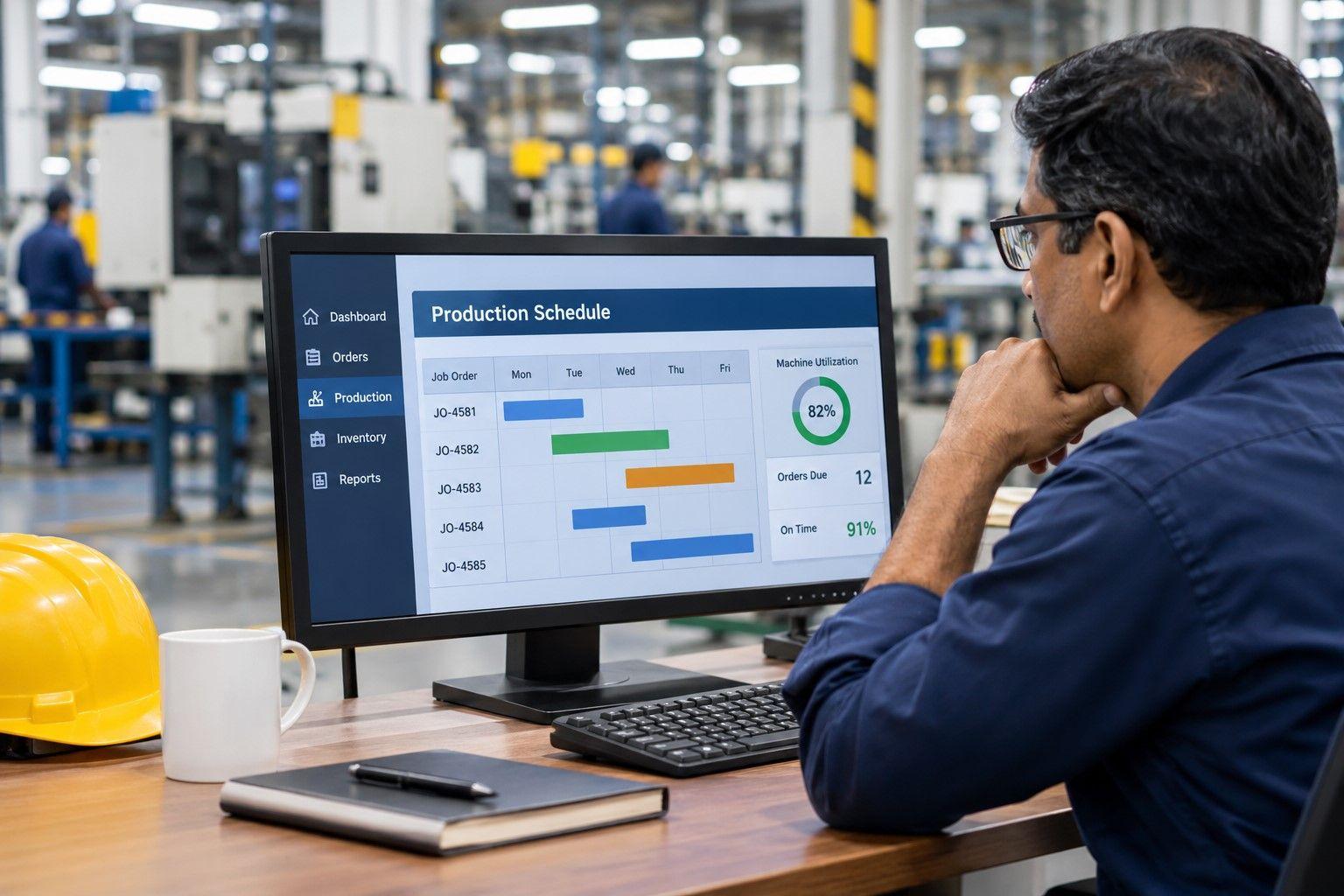
Take a manufacturer that has become good at planning production. Its planners know which orders can run together, how much machine time is available and which jobs need to be completed first. They have learned this through years of dealing with suppliers, machines, staff and customer deadlines.
The company has an ERP. It records inventory, purchasing and finance, but the production team still uses spreadsheets to work out the schedule. The arrangement may look untidy, yet it works. Orders go out and the team knows how to handle the exceptions.
Now the business takes on more orders or adds another production unit. The old method becomes harder to manage. More people need the same information, managers want to see capacity across the operation, and the planner cannot keep every detail in their head.
The ERP is not necessarily the problem. It is doing the job it was bought to do. The gap is in a process the company has developed since then. A separate planning application might be enough, while the ERP continues to handle inventory and finance.
Workarounds have a way of becoming permanent
Ask people in a growing company how they use their business systems and the answer may include quite a few spreadsheets. Sales has a customer tracker. Operations has an order sheet. Finance has a file for checking figures before reports go to management.
There is usually a reason. The main system may not show the information in the required format, or it may take too many steps to complete a routine task. Someone creates a spreadsheet to get the work done. Other people start using it, and the workaround becomes part of the process.
Not every spreadsheet is a problem. Excel is useful. The concern is when important work depends on files that are hard to control. People use different versions, enter the same details more than once or rely on one colleague who understands the formulas.
Employees then spend time checking which file is current. If that colleague leaves, someone else has to work out the process. It may be time to consider a shared application, better configuration or a small custom tool.
When the system starts limiting decisions
A software limitation does not always show up as a fault. Sometimes it appears in a meeting.
The sales team wants to try a different pricing arrangement for a group of customers. The idea makes sense, but the billing system cannot handle it without manual adjustments. Finance is concerned about reconciliation, so the proposal is put aside.
Or an operations manager wants to change an approval process. The current application makes the change difficult, and the team decides to keep doing things the old way.
No one may say the software made the decision. The explanation is that the change would take too much effort. If good ideas keep getting dropped for the same reason, the company should look at the system. Software should support the way a business runs, not decide which improvements are worth attempting.
Custom does not have to mean replacing the ERP
The phrase "custom application" can sound like a large project: a new ERP, a data migration, staff training and months of disruption. Sometimes a business does need a major replacement. Often, it needs something much smaller.
A manufacturer might keep its ERP for finance and stock but add a production planning tool. A distributor could give dealers a portal to check availability, place orders and follow deliveries. A services company might need a customer portal that brings together information held in its CRM and billing system.
The existing products remain in place. The new application deals with a specific gap.
Sometimes even that is unnecessary. Two systems may need to exchange information, an approval process may need automation, or an existing feature may not have been configured. At YBrantWorks, we start by asking what employees are trying to do, where the current setup gets in the way and what already works. That is more useful than beginning with a list of features to build.
The cost of carrying on as before
The cost of custom development is visible. There is a proposal, a scope and a figure to approve. The cost of keeping an awkward process is spread across the working week, so it is easier to miss.
An employee spends time copying information between systems. A manager waits for figures to be collected from several departments. A customer waits while someone checks an order status in a separate file. None of these tasks may appear as a line in the software budget, but they take time.
The company may also have stopped considering changes because everyone knows the current system will make them difficult. That cost is harder to measure, but it belongs in the decision.
Not every inconvenience deserves a development project. Where the same issue affects several people or delays important work, management should compare the cost of fixing it with the cost of carrying on as before.
Not every problem needs custom software
It is easy for a discussion about custom development to grow into a long wish list. Each department has a feature it would like, and the project gets bigger before anyone has agreed on the main problem.
Some functions are better left to standard products. Accounting, payroll, email and routine CRM tasks are common requirements; there is little value in building separate versions without a clear reason.
Even when a system falls short, custom development may not be the answer. The process may need to change. The software may need better configuration. An integration or a simple automation may be enough.
The people who use the system every day can help identify the real issue. Ask where they repeat work, where information gets stuck and which tasks they still handle outside the main application.
YBrantWorks works with businesses on custom application development, system integration and workflow automation. The starting point is to understand the requirement. Sometimes that means building an application; sometimes it means making better use of what the company already has.
Has the business outgrown its software?
There is no revenue figure or employee count that tells a company when it needs custom applications. A small manufacturer with a specialised process may need one before a larger business with standard operations.
The signs are part of everyday work: employees keep separate records, managers struggle to see what is happening, or a sensible change becomes difficult because the software cannot support it.
The answer may be an integration, an automated workflow or a change to an existing process. If an important business process has outgrown the systems supporting it, a custom application may be the right choice.
Keep the systems that do their jobs well. Build only where there is a real gap.
If your team has developed workarounds for existing software, YBrantWorks can help assess the problem and decide what needs to change.
Loading comments...